
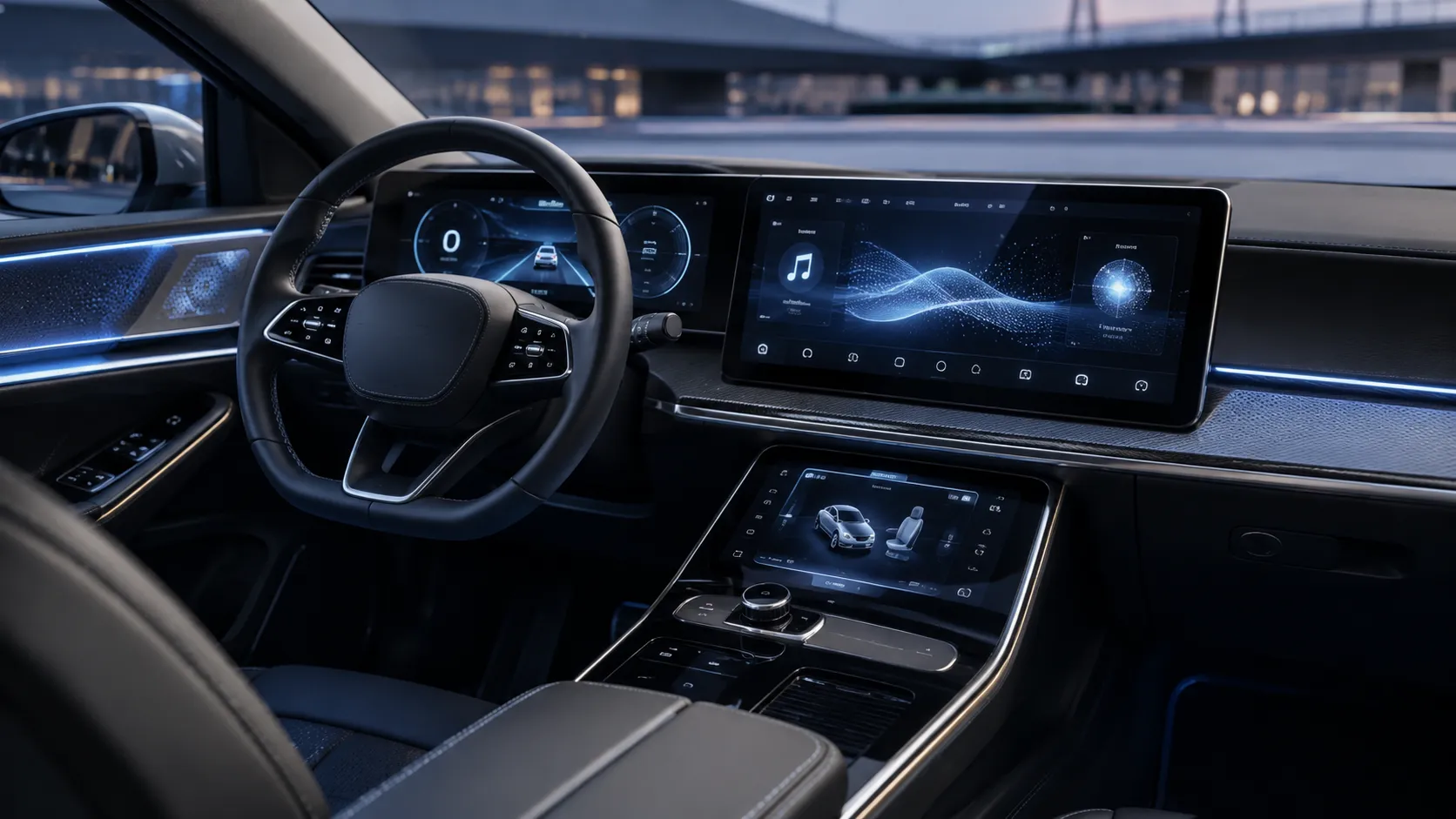
The automotive display industry is entering a new stage in 2026. Vehicles are no longer using displays only for speed, fuel level, or basic infotainment. Today, smart cockpit display systems combine digital dashboards, center information displays, passenger screens, rear-seat entertainment, HVAC control panels, camera monitoring systems, and ADAS information.
According to recent market research, the global automotive display market is expected to continue growing strongly from 2026 onward, driven by electric vehicles, connected cars, and fully digitalized vehicle cockpits. Global Market Insights reported that TFT-LCD remained the leading automotive display technology in 2025, while OLED is growing faster in premium and electric vehicle applications.
At the same time, CES 2026 highlighted a clear direction: automotive displays are moving from single components to complete cockpit platforms, where form factor, AI, software, content, and user experience are connected together.
However, while OLED, Mini LED, and MicroLED receive strong attention, TFT LCD modules still play an important role in automotive display applications, especially in mainstream vehicles, industrial vehicles, commercial fleets, and cost-sensitive smart cockpit systems.
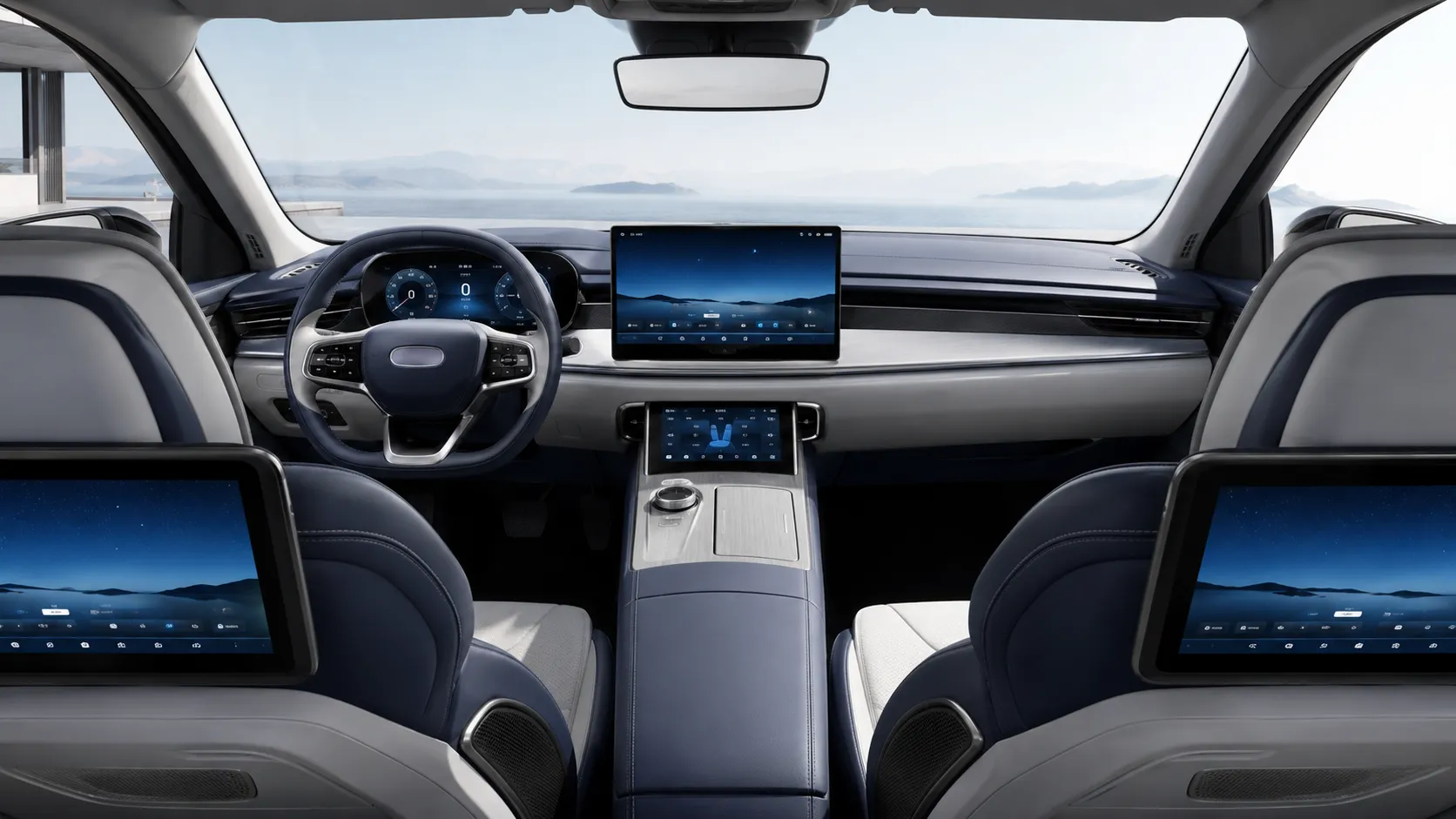
A smart cockpit may contain multiple screens, but not every display needs the most expensive technology.
For many automotive projects, a TFT LCD module remains the practical choice because it offers a strong balance between:
In vehicle applications, reliability is often more important than visual luxury. A display must remain readable under sunlight, stable across temperature changes, and suitable for long product lifecycles.
This is why TFT LCD is still widely used in:
Market reports also show that automotive smart displays are expanding because modern vehicles use more screens per vehicle, while TFT-LCD continues to dominate many volume applications due to cost and reliability advantages.
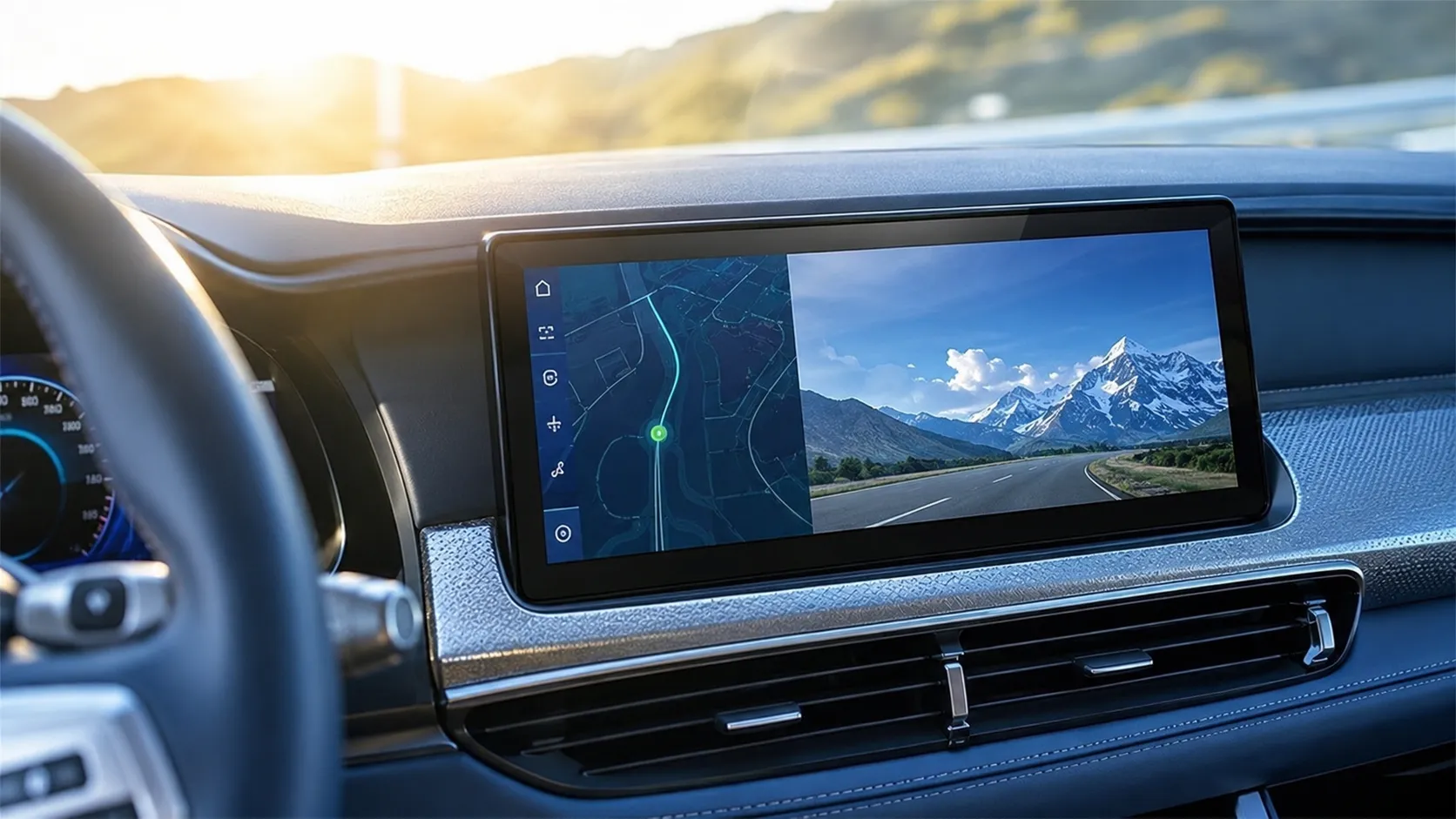
When engineers select an automotive display, resolution is only one factor.
A reliable smart cockpit display needs to meet several practical requirements:
Automotive interiors often face direct sunlight. If a screen is not bright enough, users may struggle to read navigation, warning messages, or vehicle status information.
For this reason, high brightness TFT LCD displays are commonly used in vehicle applications. Depending on the installation environment, brightness requirements may range from standard indoor levels to 800 nits, 1000 nits, or higher.
High brightness is especially important for:
Vehicles may operate in very different climates. A display may face freezing temperatures in winter and high cabin temperatures in summer.
A wide temperature LCD is therefore essential for automotive and industrial vehicle applications.
Common design considerations include:
For automotive-related projects, engineers usually need to evaluate not only the LCD panel, but also the complete module structure.
Touch interaction is now common in smart cockpits.
A capacitive touch screen can improve user experience in:
However, automotive touch screens must also consider vibration, glove operation, moisture, EMI interference, and long-term durability.
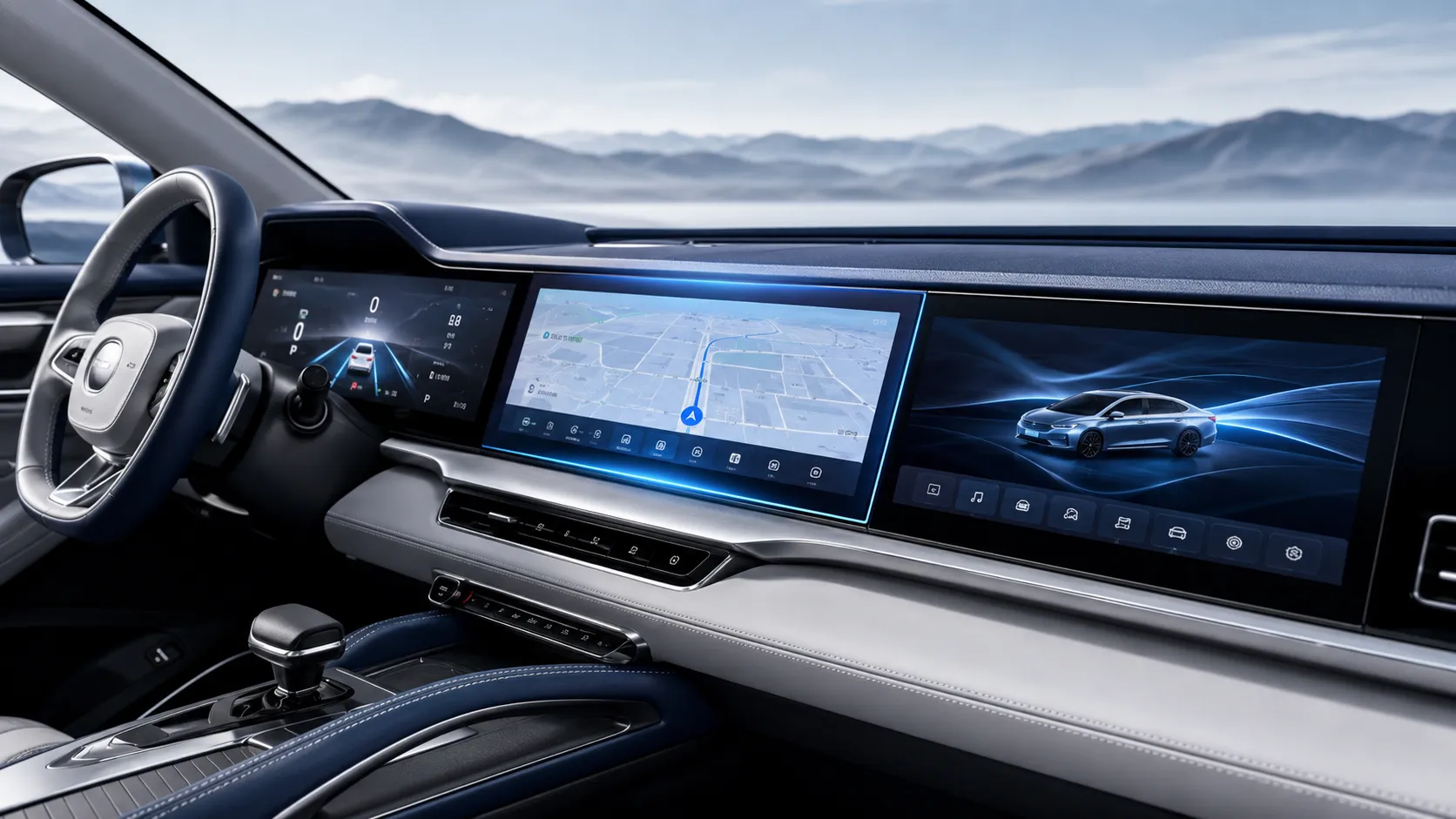
Although OLED and MicroLED are often discussed in premium vehicle displays, TFT LCD remains important for several reasons.
Automotive projects often require large production volumes. Even a small cost difference per display can significantly affect the total product cost.
Compared with OLED or MicroLED, TFT LCD technology has a more mature supply chain and more stable manufacturing ecosystem. This makes it easier for automotive suppliers to control cost, quality, and delivery schedule.
For mid-range vehicles, commercial vehicles, industrial machines, and aftermarket systems, TFT LCD is still one of the most realistic choices.
TFT LCD modules can be customized in many ways, including:
This flexibility is valuable for automotive display projects because different vehicles have different mechanical structures, interface requirements, and installation environments.
Automotive projects often have long development cycles and long product lifecycles.
A display used in a vehicle platform may need stable supply for several years. TFT LCD technology has advantages in long-term production planning because many standard sizes and mature panel platforms are available.
For B2B buyers and engineers, this reduces the risk of frequent redesign.
TFT LCD may not replace every advanced display technology, but it remains highly suitable for many automotive applications.
Digital dashboards require stable brightness, good viewing angles, and reliable operation.
TFT LCD modules can support clear visual information such as:
Center displays are becoming larger and more interactive.
For many vehicle platforms, TFT LCD provides a practical solution with good image quality, mature production, and reasonable cost.
Commercial vehicles and industrial vehicles often prioritize reliability over luxury.
Examples include:
These systems usually require rugged display modules with high brightness, wide temperature support, and stable touch performance.
When choosing a display supplier for automotive or smart cockpit projects, engineers and procurement teams should evaluate more than price.
Important factors include:
A good supplier should understand:
Quality control is critical for vehicle displays because failures may affect user experience and safety perception.
Important inspection areas include:
For B2B projects, customization is often necessary.
A strong TFT LCD module manufacturer should support:
The main automotive display trends in 2026 include smart cockpits, larger digital dashboards, more in-vehicle screens, ADAS information displays, high brightness panels, and advanced technologies such as OLED, Mini LED, and MicroLED.
TFT LCD is still widely used because it offers a mature supply chain, stable performance, cost-effective production, high brightness options, and good customization flexibility.
OLED offers excellent contrast and flexible design potential, especially for premium vehicles. However, TFT LCD is still more practical for many mainstream automotive and industrial vehicle applications because of cost, reliability, and supply stability.
Engineers should consider brightness, viewing angle, operating temperature, interface type, touch panel design, mechanical structure, backlight lifetime, and long-term supply support.
Automotive display trends in 2026 are moving toward smarter, larger, and more integrated cockpit systems. OLED, Mini LED, and MicroLED will continue to grow in premium applications, but TFT LCD remains highly relevant for practical automotive display projects.
For many smart cockpit display applications, TFT LCD modules provide the best balance of cost, reliability, brightness, customization, and supply chain stability.
For automotive engineers and procurement teams, the key is not simply choosing the newest display technology. The better decision is selecting the display solution that fits the real application environment, production volume, reliability requirements, and project budget.
As smart cockpits continue to expand, TFT LCD modules will remain an important foundation of modern vehicle display systems.
UART Debugging Pitfalls Every Embedded Engineer Eventually Encounters
CCFL vs WLED: Why Modern TFT LCD Modules Depend on LED Backlight Technology
Designing HMI Interfaces with 4.3″ and 7″ Displays: UI/UX Best Practices
How to Choose Between 4.3″ and 7″ TFT Displays for Industrial Control Systems
What is TFT Technology? A Complete Guide to Modern Display Driving