
In today’s display industry, whether it’s LCD monitors, automotive screens, or even OLED panels, one essential technology works behind the scenes: TFT (Thin Film Transistor).
Without TFT, modern high-resolution and high-refresh-rate displays would not be possible.
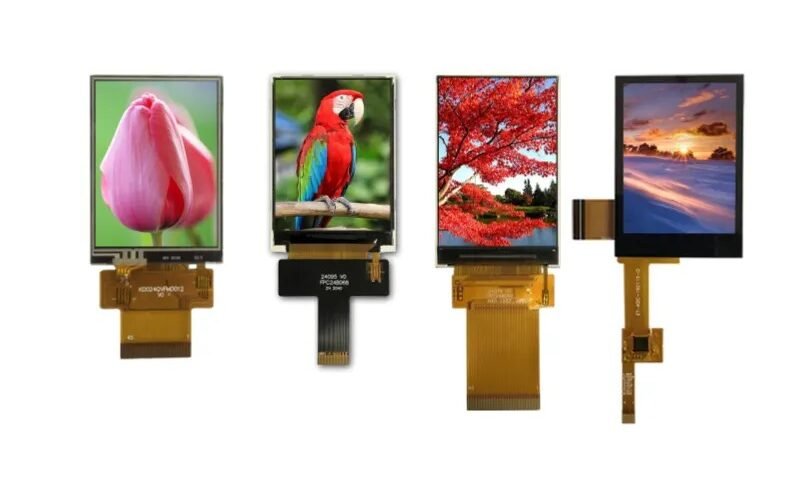
TFT stands for Thin Film Transistor, a type of semiconductor device used as a switch for each individual pixel in a display.
In a TFT-LCD panel, every pixel is controlled by its own transistor, allowing precise control over brightness and color.
👉 Important note:
TFT is not limited to LCD — it is also widely used as the backplane technology in OLED displays.
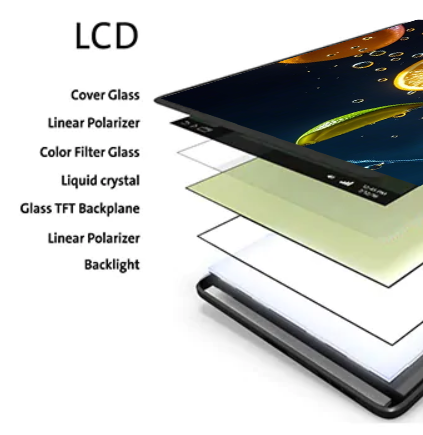
A TFT-LCD panel consists of multiple layers stacked together:
👉 Among these, the TFT layer is the control center of the entire display.
TFT displays use an Active Matrix driving method, which is the key to high performance.
Each pixel typically includes:
And is connected via:
Instead of lighting all pixels at once, the display updates row by row at high speed:
This cycle repeats 60Hz, 120Hz, or higher, creating smooth images.
Once the TFT turns off:
👉 The capacitor holds the voltage like a tiny battery
This ensures stable brightness until the next refresh cycle.
Compared to older passive matrix displays, TFT offers major improvements:
Each pixel is independently controlled, eliminating interference
Modern TFT panels can achieve millisecond-level response
Supports Full HD, 4K, and even 8K displays
Works well with IPS and VA technologies
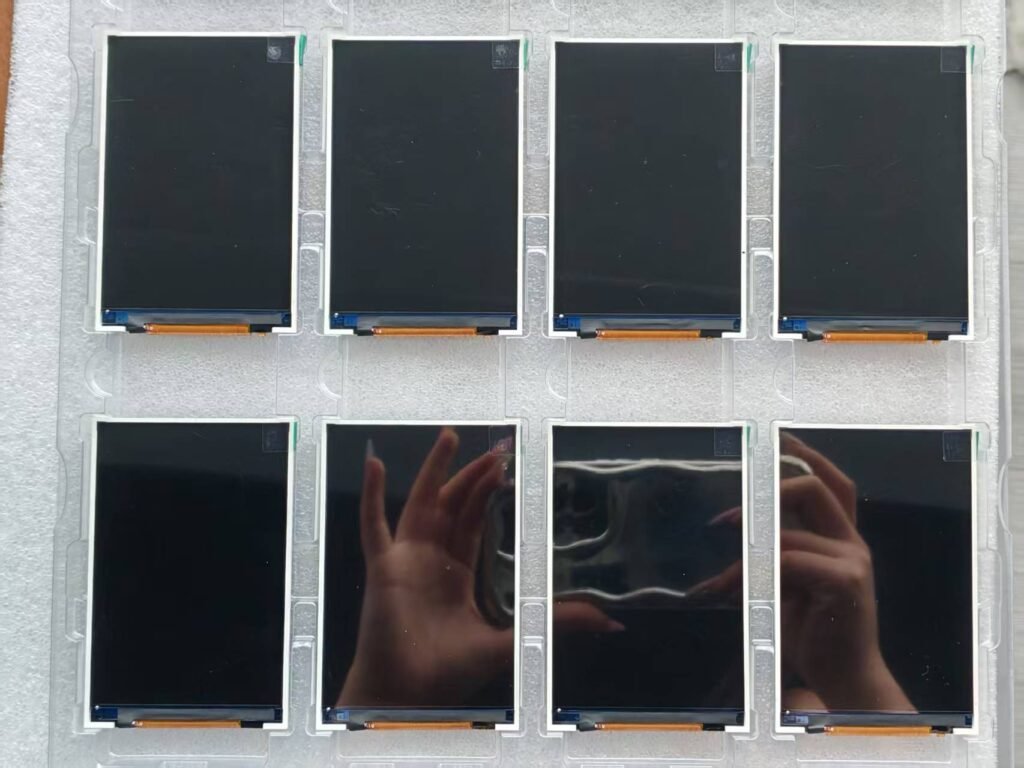
Different materials define TFT performance. The three main types are:
👉 Best for: cost-sensitive, large-size panels
👉 Best for: high-end, energy-efficient displays
👉 Best for: smartphones and premium devices
Although both LCD and OLED use TFT, their roles differ:
👉 Voltage-driven system
👉 Current-driven system
This is why OLED requires higher TFT stability and performance.
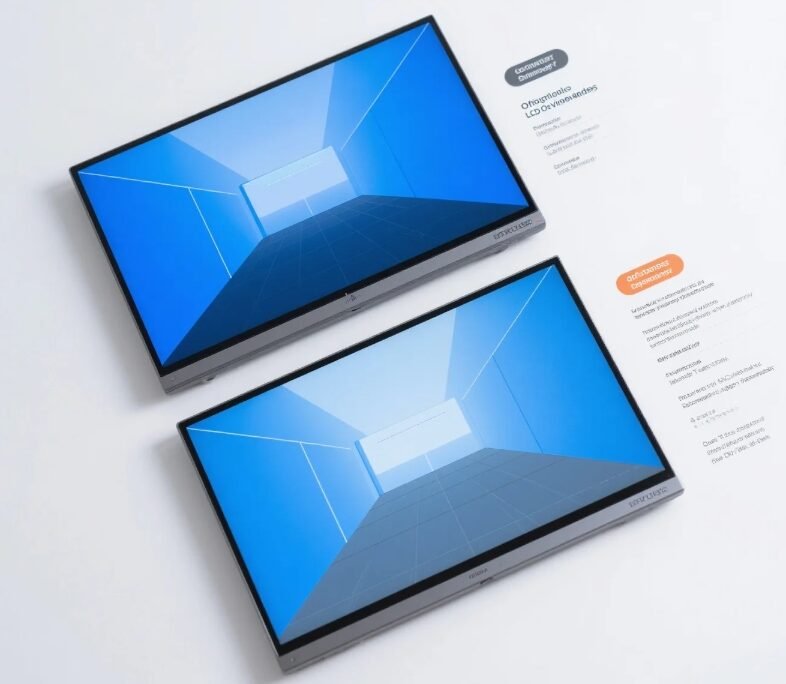
Even with the rise of OLED, TFT remains essential:
TFT technology is the foundation of modern displays.
By integrating a tiny transistor and capacitor at each pixel, TFT enables:
In simple terms:
TFT makes every pixel independently controllable — and that’s what powers today’s display world.
Are you looking for reliable TFT display solutions?
We provide high-volume, customized TFT LCD modules for industrial, medical, and automotive applications.
👉 Contact us today to get expert support and competitive pricing.
TFT vs STN Cost Comparison: Which LCD Technology Is More Cost-Effective?
High Brightness LCD Cost Explained: What Really Drives the Price?
Analog vs Digital LCD: Signal Architecture, TFT Interfaces, and Engineering Trade-offs