
Choosing the correct interface is a critical step when integrating an LCD display into embedded systems or industrial devices. The display interface determines how image data is transmitted from the main processor to the display module. A mismatch between the display interface and system architecture can lead to performance limitations, increased design complexity, or compatibility issues.
Among the most widely used display interfaces today are RGB, LVDS, and MIPI. Each interface has unique characteristics in terms of signal transmission, bandwidth, hardware complexity, and application scenarios.
This article compares LVDS, MIPI, and RGB interfaces to help engineers select the most suitable solution for their display integration projects.
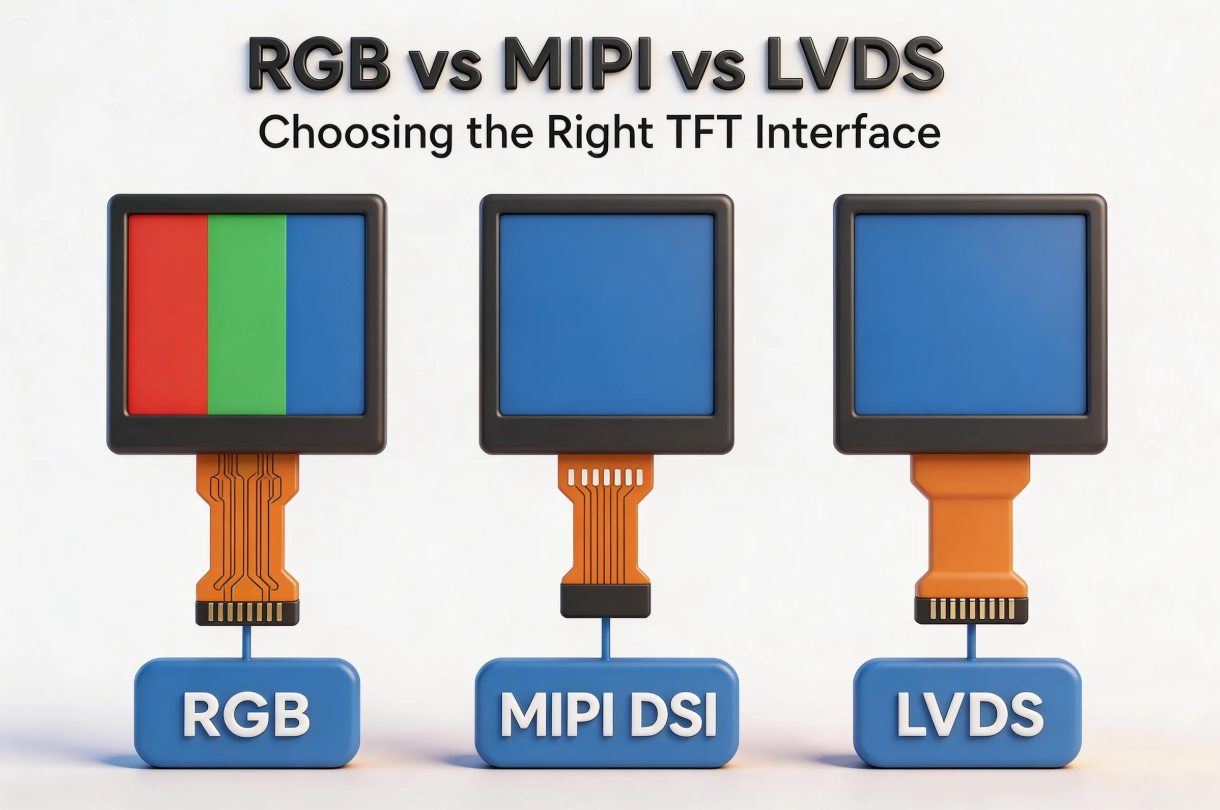
The RGB interface is one of the most traditional display interfaces used in embedded systems. It directly transmits pixel data signals from the processor to the display driver.
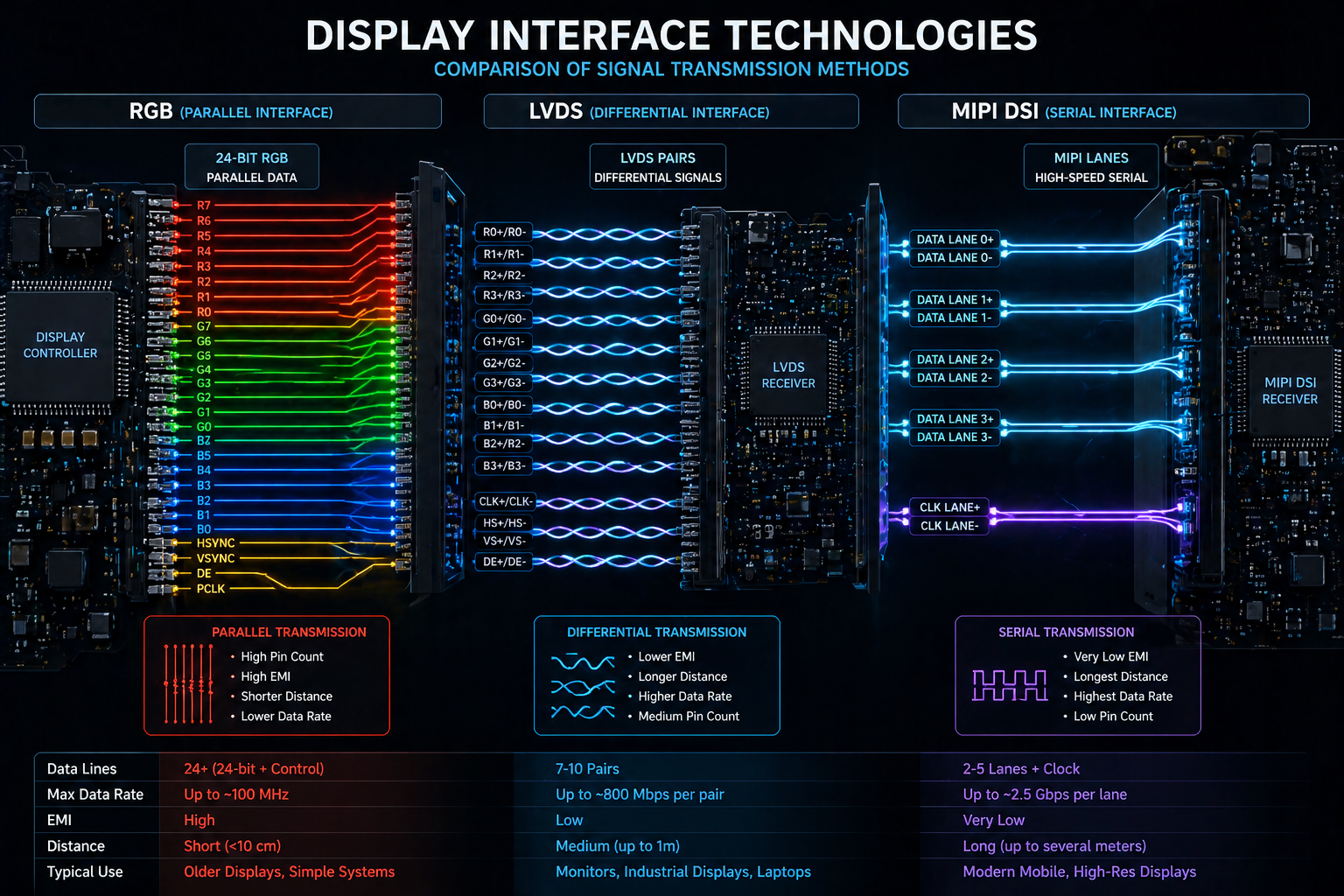
RGB interfaces typically use parallel data transmission. Separate digital signals represent red, green, and blue pixel information, along with synchronization signals such as horizontal sync (HSYNC), vertical sync (VSYNC), and pixel clock.
Because RGB interfaces use parallel data lines, the number of pins increases as resolution grows. This makes PCB routing more complex for high-resolution displays.
RGB interfaces are commonly used in small to medium embedded systems and microcontroller-based designs.
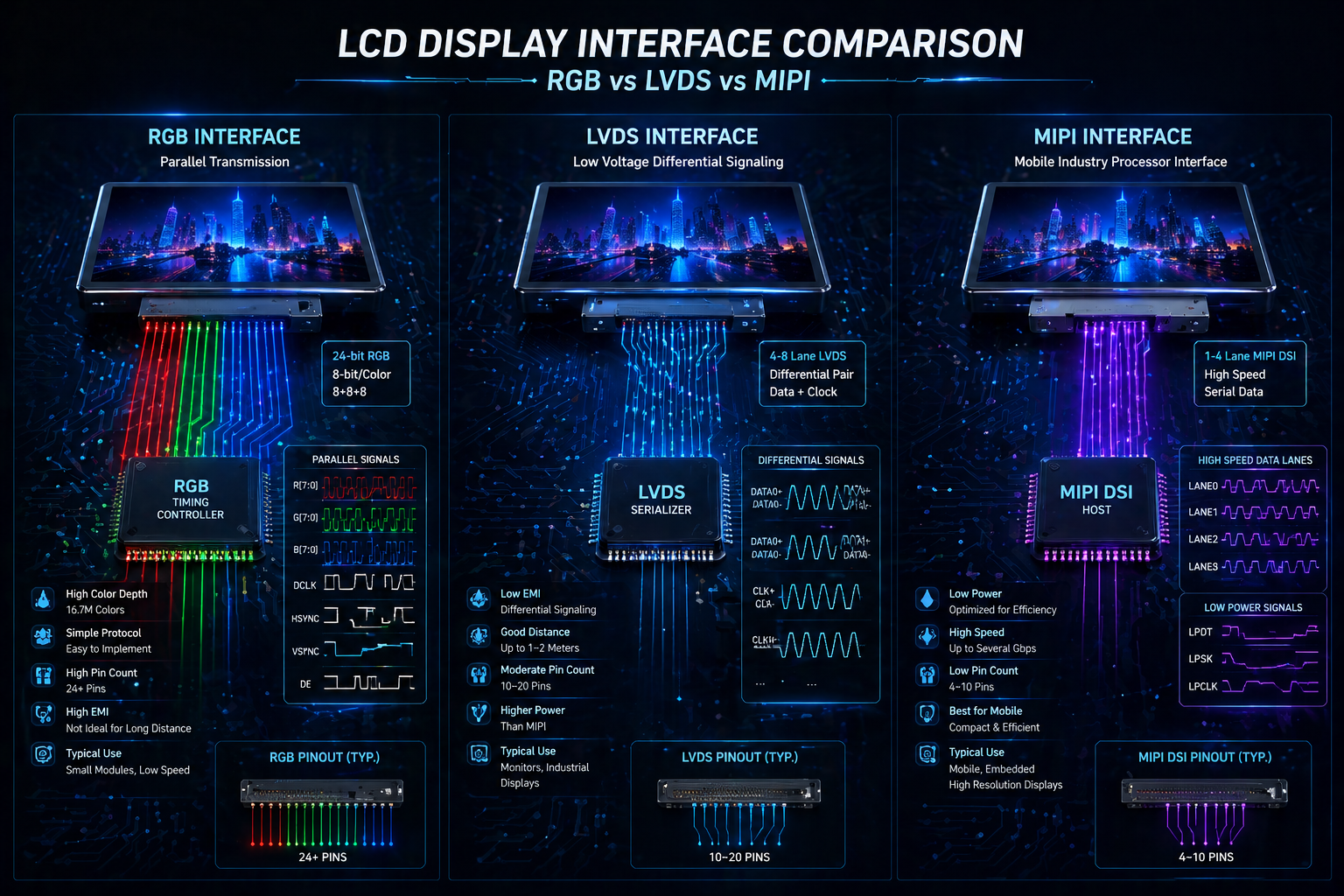
LVDS (Low Voltage Differential Signaling) is a high-speed digital transmission technology widely used in industrial displays and larger TFT LCD panels.
LVDS transmits data using differential signal pairs. Instead of sending data through many parallel lines like RGB interfaces, LVDS serializes the data and sends it through fewer high-speed channels.
LVDS is commonly used in displays with medium to high resolutions, such as those found in industrial equipment, medical devices, and automotive systems.
MIPI DSI (Mobile Industry Processor Interface – Display Serial Interface) is a modern high-speed display interface originally developed for mobile devices such as smartphones and tablets.
MIPI uses high-speed differential lanes to transmit display data efficiently while minimizing power consumption. It supports very high resolutions and fast refresh rates.
MIPI DSI has become the preferred interface for high-resolution embedded displays in mobile devices, tablets, and advanced embedded platforms.
| Feature | RGB | LVDS | MIPI |
|---|---|---|---|
| Signal Type | Parallel Digital | Differential Serial | High-Speed Differential |
| Pin Count | High | Medium | Low |
| Transmission Distance | Short | Medium | Short |
| Bandwidth | Moderate | High | Very High |
| System Complexity | Low | Medium | High |
| Typical Applications | MCU Displays | Industrial Equipment | Mobile Devices |
Selecting the correct display interface depends on several design factors.
Processor Compatibility
The interface supported by the processor is often the primary constraint. Many microcontrollers support RGB interfaces, while advanced application processors support LVDS or MIPI.
Display Resolution
Higher resolution displays require higher bandwidth interfaces. LVDS and MIPI are better suited for high-resolution displays.
PCB Design Complexity
Parallel RGB interfaces require many signal traces, which increases PCB complexity. Serial interfaces such as LVDS and MIPI reduce routing difficulty.
Power Consumption
Low-power devices such as handheld electronics often benefit from MIPI interfaces due to their power efficiency.
RGB, LVDS, and MIPI interfaces each serve different roles in modern display systems. RGB interfaces are simple and suitable for microcontroller-based designs. LVDS provides reliable high-speed transmission for industrial displays. MIPI offers the highest bandwidth and power efficiency for advanced embedded systems.
Understanding these differences helps engineers select the most appropriate display interface for their application, ensuring stable performance and efficient system design.
Looking for an LCD module with LVDS, MIPI, or RGB interface?
Our engineering team supports OEM and embedded product developers with customized display solutions.
We offer:
RFQ Information
To help us recommend the right display module, please provide:
Our engineers will provide a suitable display solution and quotation.
Custom LCD Design Guide for OEM Products
LCD Display Cost Breakdown: What Determines the Price of a TFT Display
How to Choose a Reliable LCD Manufacturer for OEM Projects