
Selecting a reliable LCD manufacturer is a critical step for companies developing electronic products. Displays are one of the most visible and functionally important components in devices such as industrial controllers, medical instruments, POS terminals, and embedded systems.
Choosing the wrong supplier can lead to inconsistent quality, unstable supply chains, and expensive redesigns during mass production. For OEM teams, evaluating an LCD manufacturer requires more than comparing prices. It involves understanding technical capabilities, quality control standards, engineering support, and long-term supply stability.
This guide explains the key factors engineers and procurement teams should consider when selecting a reliable LCD manufacturer.
A dependable LCD manufacturer should have strong production capabilities and experience with display module integration. This includes assembling TFT LCD panels, integrating driver ICs, designing backlight units, and supporting touch panel integration.
Manufacturers with vertically integrated production processes often provide better consistency and faster engineering response. Suppliers that handle module assembly, backlight manufacturing, and quality inspection internally can usually support customization more efficiently.
When evaluating a supplier, consider whether they support:
These capabilities are especially important for OEM products that require customized display modules.
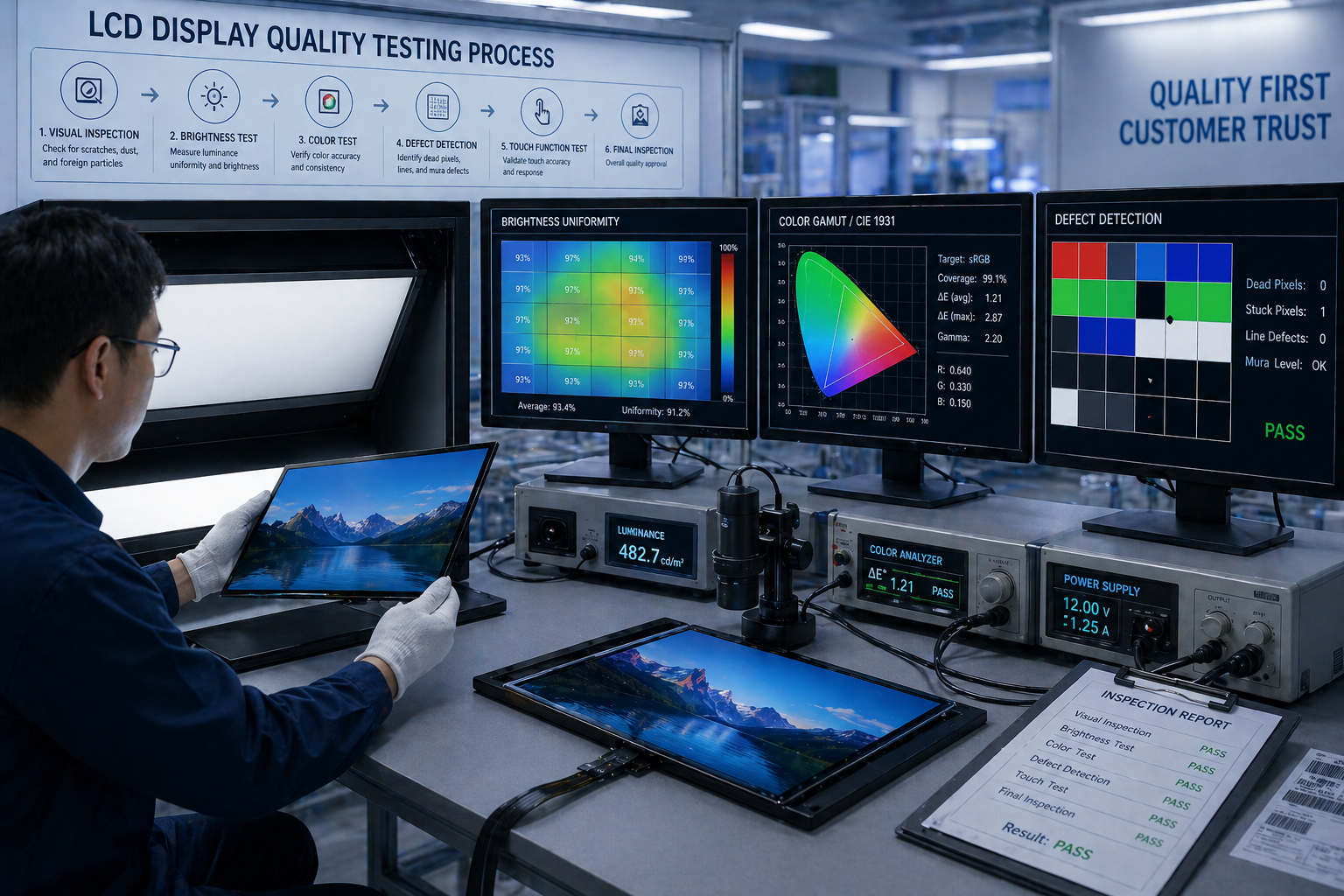
Quality management is a key indicator of a reliable LCD supplier. Most reputable manufacturers operate under internationally recognized quality systems such as ISO 9001 to ensure stable production processes.
LCD module quality testing typically includes:
For industrial applications, some manufacturers also perform environmental testing such as temperature cycling, vibration testing, and aging tests. These procedures help ensure display reliability in demanding environments.
Consistent quality control significantly reduces product failure rates and improves long-term reliability.
Engineering support is another critical factor when choosing an LCD manufacturer. During product development, engineers often need assistance integrating display modules with their hardware platforms.
A reliable supplier should provide:
Displays involve signal timing, voltage compatibility, and mechanical integration challenges. Manufacturers with experienced engineering teams can help resolve these issues more quickly and reduce development time.
Many industrial and medical devices remain in production for five to ten years. Therefore, supply chain stability becomes a key consideration when selecting an LCD manufacturer.
Important questions include:
A stable supply chain helps reduce production risks and ensures that products can remain in the market without unexpected redesigns.
Effective communication is essential for successful supplier relationships. Reliable LCD manufacturers typically provide clear documentation, quick responses to technical questions, and transparent development timelines.
When working with international suppliers, responsive communication becomes even more important. Efficient collaboration between engineering teams and display manufacturers can greatly improve product development efficiency.
Although cost is always a factor in supplier selection, choosing a manufacturer based only on the lowest price can introduce long-term risks. Lower-cost suppliers may lack engineering resources, quality control systems, or stable supply chains.
Instead, companies should evaluate the overall value provided by a display supplier, including:
A reliable LCD manufacturer should be viewed as a long-term technical partner rather than simply a component vendor.
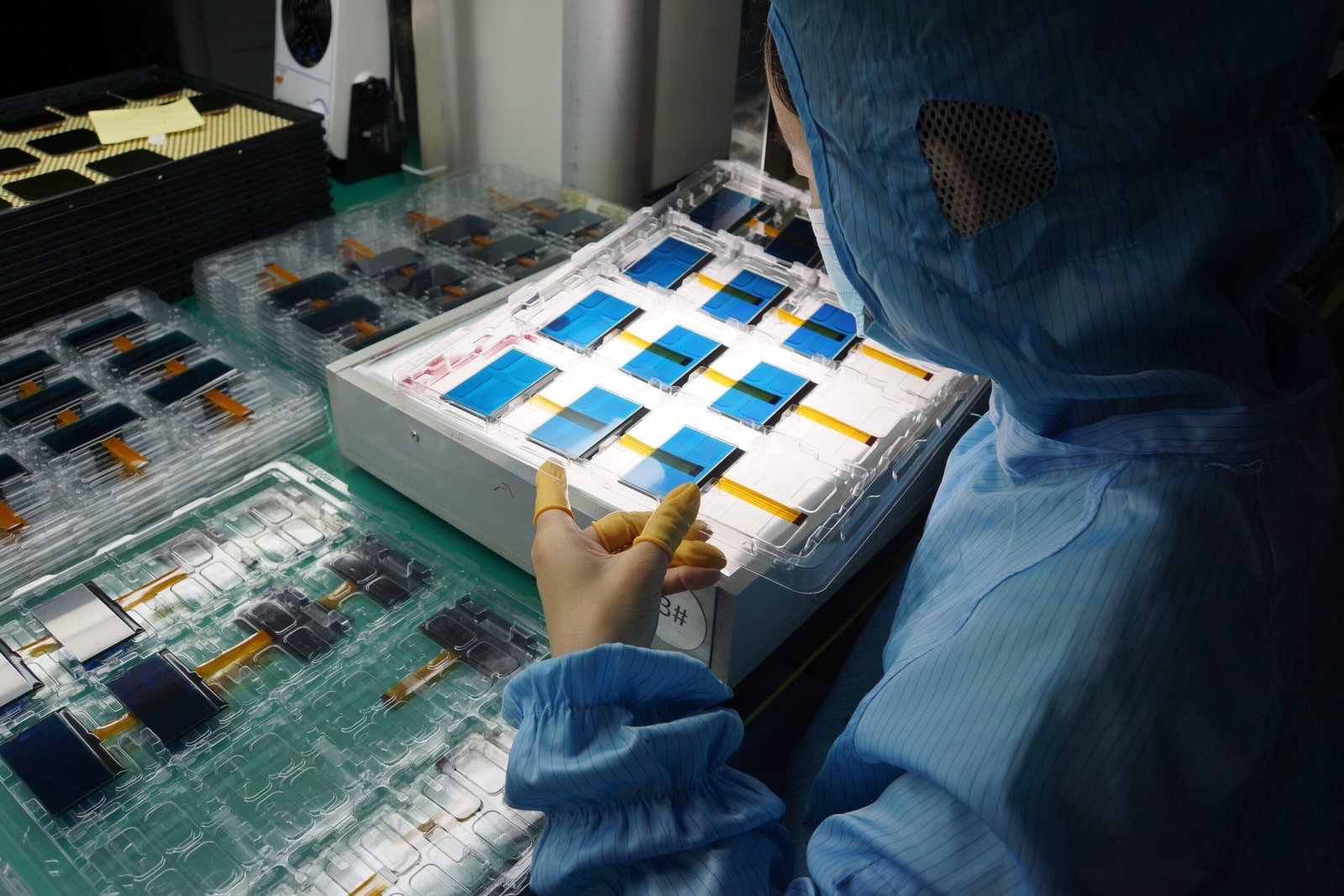
Selecting the right LCD manufacturer plays an important role in the success of OEM electronics products. By carefully evaluating manufacturing capabilities, quality standards, engineering support, and supply chain reliability, companies can reduce development risks and ensure stable long-term production.
A qualified display supplier not only provides high-quality modules but also supports engineers throughout the product lifecycle, helping bring reliable electronic devices to market more efficiently.
Looking for a reliable LCD manufacturer for your next project?
We support OEM customers with:
If you are evaluating display suppliers for your product, feel free to send us your requirements.
RFQ Information
To help us recommend the right display solution, please include:
Our engineering team will respond with a suitable display solution and quotation.
TFT vs STN Cost Comparison: Which LCD Technology Is More Cost-Effective?
High Brightness LCD Cost Explained: What Really Drives the Price?