
Custom LCD displays are widely used in industrial equipment, medical devices, consumer electronics, and embedded systems. While standard display modules are suitable for many applications, OEM products often require customized displays to meet specific design, performance, or mechanical requirements.
Custom LCD design allows product teams to optimize the display for their device, improving user experience, system integration, and overall product reliability. However, designing a custom LCD module requires careful planning and collaboration between engineers and display manufacturers.
This guide explains the key considerations when designing a custom LCD display for OEM products.
The first step in custom LCD design is selecting the appropriate display size and resolution. These parameters directly affect the user interface, mechanical layout, and system performance.
Display size should match the physical design of the product and the amount of information that needs to be displayed. Larger displays improve readability but may increase power consumption and cost.
Resolution determines how detailed the content appears on the screen. Higher resolution provides better image clarity but requires stronger processing capability from the system’s graphics controller.
When defining size and resolution, engineers should consider the balance between usability, performance, and cost.
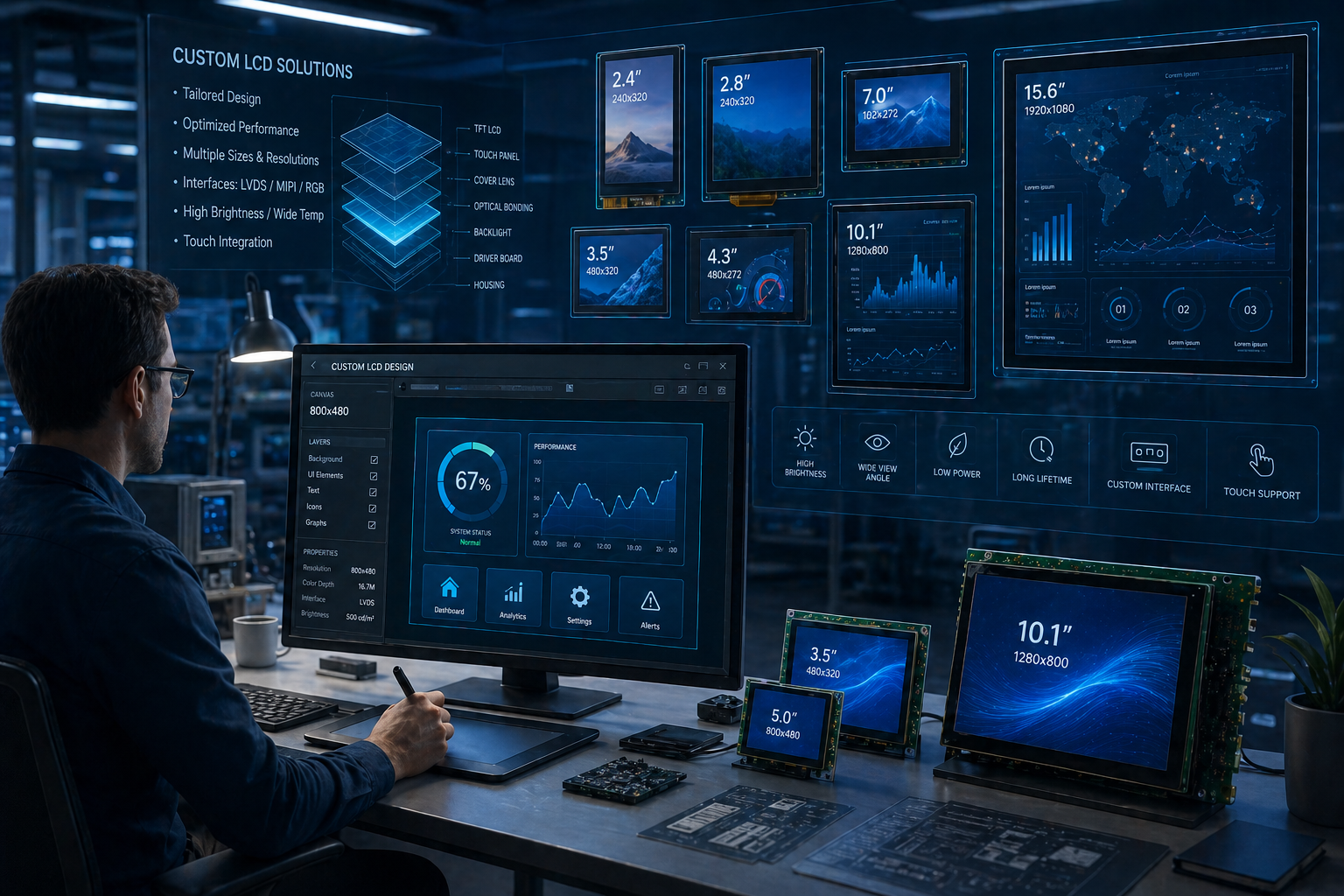
The display interface determines how the LCD module communicates with the main processor or microcontroller.
Common display interfaces include:
Each interface has different bandwidth requirements and hardware complexity. For example, MIPI interfaces are widely used in high-resolution embedded systems, while RGB interfaces are common in microcontroller-based products.
Selecting the correct interface early in the design phase helps avoid compatibility issues later in development.
Brightness is one of the most important performance parameters for LCD displays. The required brightness depends largely on the operating environment of the product.
Indoor devices typically require moderate brightness levels, while outdoor equipment may need high brightness displays to remain visible under strong ambient light.
Viewing angle is another important factor. IPS panels are commonly used in applications that require wide viewing angles and consistent color performance.
Understanding the product’s operating environment helps ensure that the display remains readable in real-world conditions.
Many modern devices require touchscreen functionality. Custom LCD modules can integrate different types of touch panels depending on the application.
Two common technologies are:
Capacitive touch is widely used in modern devices due to its multi-touch capability and smooth user experience. Resistive touch panels, on the other hand, are often used in industrial environments where users may wear gloves.
Touch integration may also include optical bonding, which reduces reflections and improves display readability.
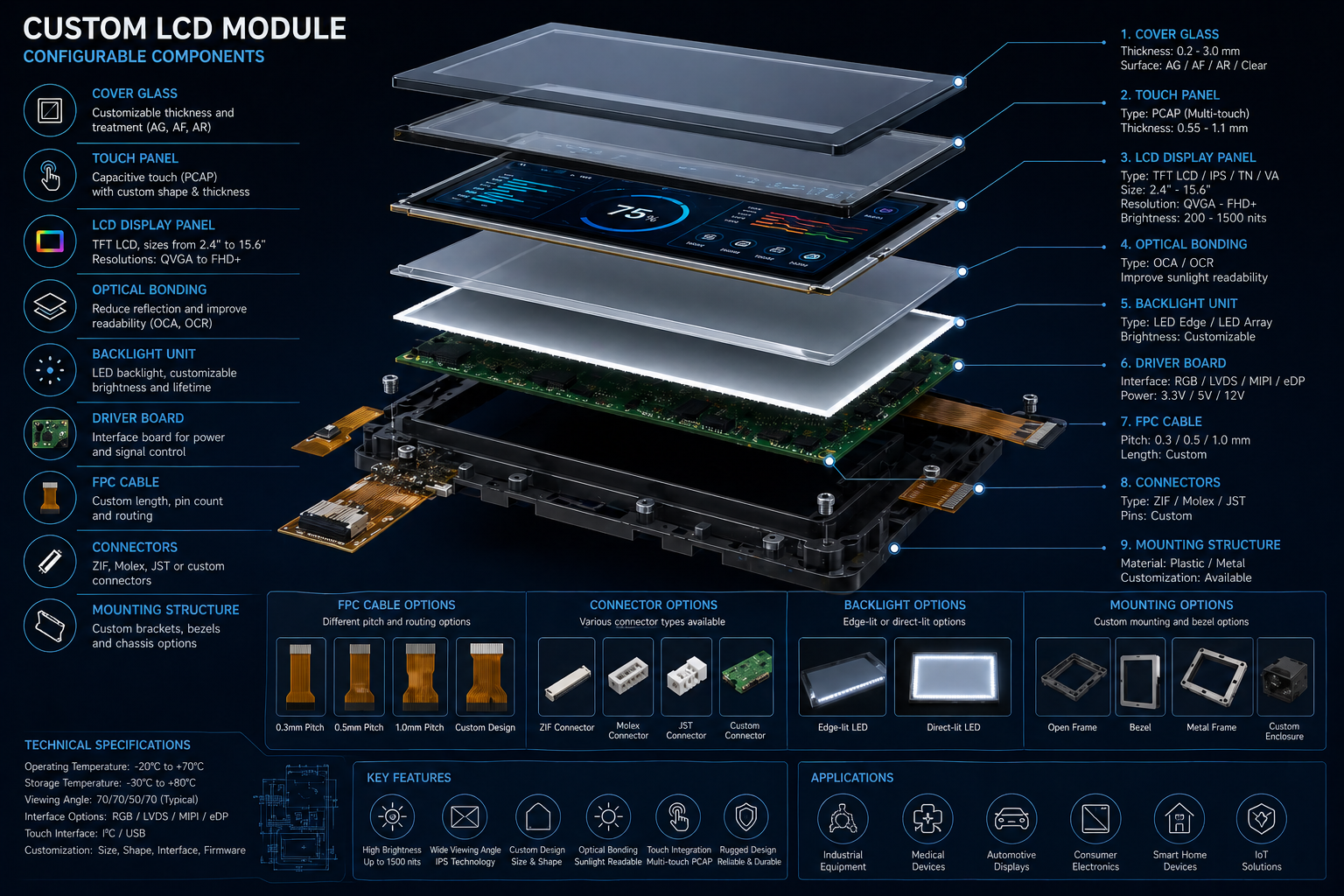
Mechanical integration is another key consideration in custom LCD design. The display module must fit properly within the product enclosure and align with the device’s user interface.
Customization options may include:
Proper mechanical design ensures that the display module can be assembled efficiently during mass production.
Many OEM products remain in production for several years. Therefore, it is important to consider the lifecycle of the display module and the stability of its supply chain.
Engineers should confirm whether the display manufacturer can provide long-term supply and notify customers in advance if components become obsolete.
Some manufacturers also support second-source strategies, allowing customers to reduce supply risks in long lifecycle products.
Custom LCD design allows OEM companies to create displays that perfectly match their product requirements. By carefully considering display size, resolution, interface, brightness, touch integration, mechanical design, and lifecycle planning, engineers can develop reliable display solutions that improve product performance and user experience.
Working closely with an experienced LCD manufacturer helps ensure that custom display projects move efficiently from design to mass production.
Need a custom LCD display for your product?
Our engineering team helps OEM companies design customized TFT LCD modules for industrial and embedded applications.
We support:
RFQ Information
To help us recommend the right display solution, please include:
Our engineers will review your requirements and provide a suitable display solution.
LCD Display Cost Breakdown: What Determines the Price of a TFT Display
How to Choose a Reliable LCD Manufacturer for OEM Projects
LCD Display Cost Breakdown: What Determines the Price of a TFT Display