
Displays are one of the most critical components in many electronic products, including industrial equipment, medical devices, POS systems, and embedded electronics. When companies start sourcing a TFT LCD module, one of the most common questions is: Why do LCD displays have different prices even when their sizes appear similar?
The cost of an LCD display is influenced by multiple factors such as panel technology, brightness requirements, touch integration, customization, and supply chain conditions. Understanding the cost structure behind LCD modules can help OEM engineers and procurement teams make better purchasing decisions.
This article explains the key factors that determine the price of a TFT LCD display.
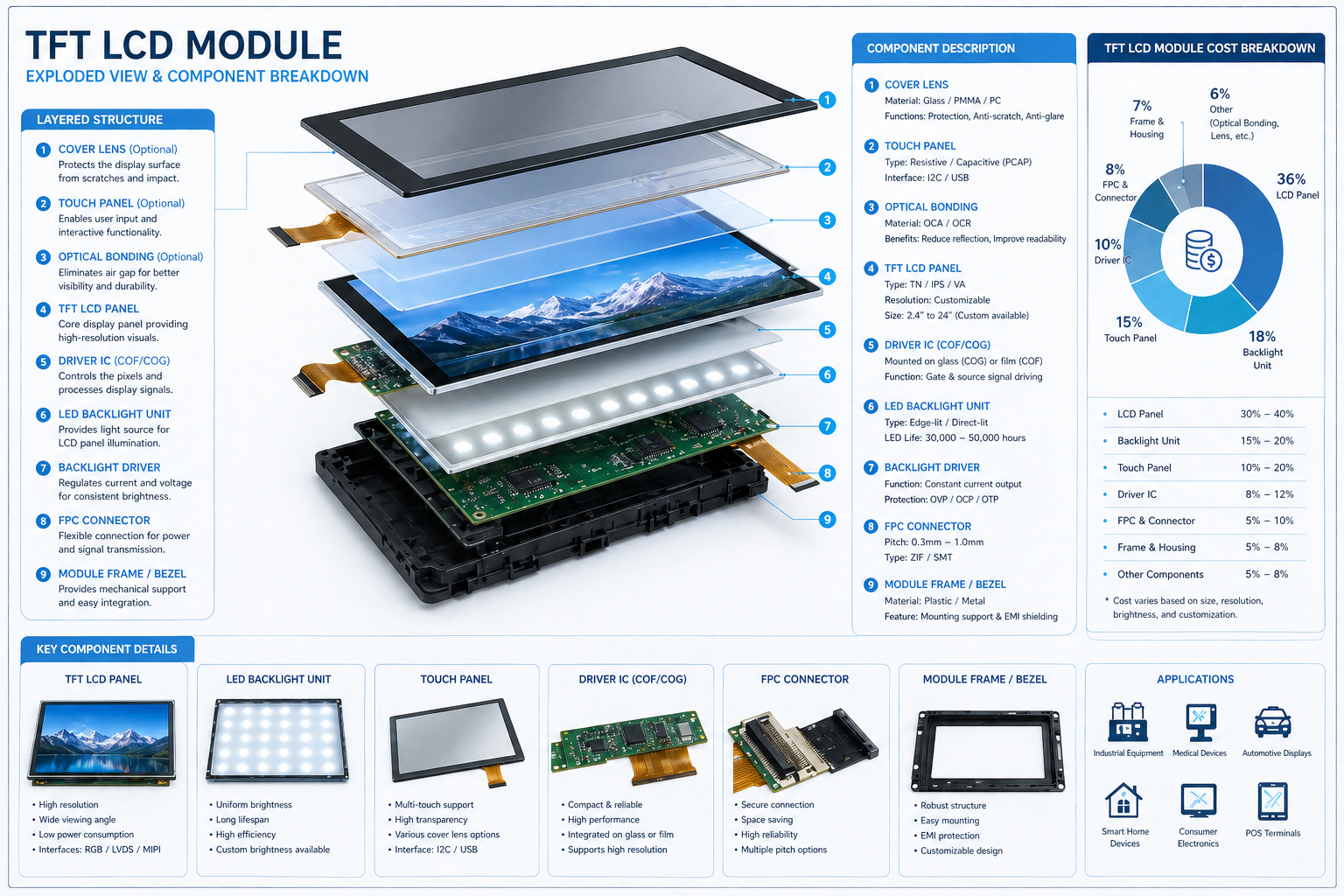
The LCD panel itself is usually the largest contributor to the overall cost of a display module. The panel includes the liquid crystal layer, color filters, polarizers, and thin-film transistor (TFT) matrix that controls each pixel.
Panel cost is mainly affected by:
Higher resolution panels contain more pixels and require more complex manufacturing processes. In addition, IPS panels typically cost more than TN panels because they provide wider viewing angles and better color performance.
For many display modules, the LCD panel can represent a significant portion of the total module cost.
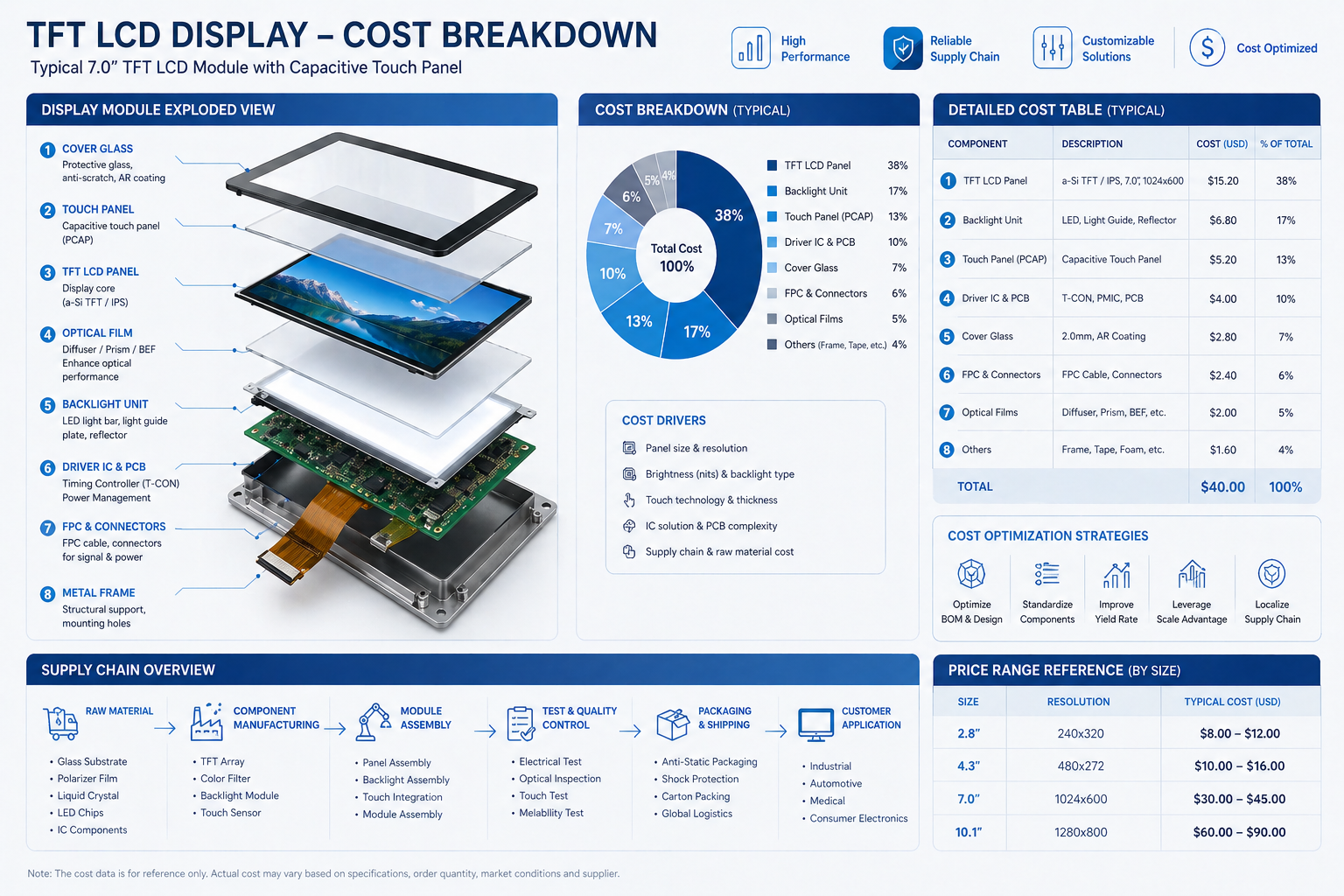
The backlight unit is another important cost factor in TFT LCD modules. Since LCD panels do not emit light by themselves, a backlight system is required to illuminate the display.
The backlight system typically includes:
Brightness requirements have a major impact on cost. Standard indoor displays usually operate around moderate brightness levels, while outdoor or sunlight-readable displays may require much higher brightness. Higher brightness levels require more LEDs and better thermal design, which increases the overall cost of the display module.
Many modern devices require touchscreen functionality. Adding a touch panel can significantly increase the price of a display module.
Two common touch technologies are:
Capacitive touch technology is widely used in modern devices because it supports multi-touch gestures and provides better optical clarity. However, capacitive touch panels require controller ICs and additional glass layers, which increases manufacturing complexity.
Touch integration may also require optical bonding, which further improves readability but adds additional production cost.
The electronics that control the display also contribute to the overall cost. These components include driver ICs, timing controllers, and interface circuitry.
The interface type used in the display module can also influence cost and design complexity. Common interfaces include:
Some interfaces require more complex hardware design or higher-speed signal routing, which can affect module pricing and integration effort.
Custom display requirements often increase development costs. Many OEM products require displays that differ from standard catalog modules.
Common customization requests include:
Custom tooling and engineering work may add initial development costs, especially during the prototype stage. However, customization can significantly improve product integration and user experience.
Supply chain conditions also play an important role in LCD pricing. Key components such as driver ICs, polarizers, and LED backlights must be sourced from specialized suppliers.
Order volume is another major factor. Larger production quantities typically reduce the cost per unit due to economies of scale.
OEM companies should also consider lead time and long-term component availability when selecting an LCD supplier.
The cost of a TFT LCD display is determined by multiple technical and supply chain factors, including the LCD panel, backlight system, touch integration, driver electronics, customization requirements, and production volume.
For OEM product teams, understanding these cost drivers helps optimize display selection and avoid unexpected expenses during product development. By working closely with experienced LCD manufacturers, companies can balance performance requirements with cost efficiency while ensuring stable long-term supply.
Looking for a cost-effective LCD display for your product?
We support OEM and hardware companies with customized display solutions.
Our capabilities include:
RFQ Information
To help us recommend a suitable display solution, please provide:
Our engineering team will respond with a suitable display solution and quotation.
TFT vs STN Cost Comparison: Which LCD Technology Is More Cost-Effective?
High Brightness LCD Cost Explained: What Really Drives the Price?