
When sourcing displays for outdoor or high-ambient-light environments, many buyers are surprised by the price difference between standard LCDs and high brightness LCD displays.
A typical indoor display (250–400 nits) may cost significantly less than a sunlight readable LCD (800–2000+ nits) — but the reasons go far beyond just “brighter backlight”.
This article breaks down the true cost structure behind high brightness LCDs, helping engineers and procurement teams make informed decisions.
A high brightness LCD is designed for clear visibility under direct sunlight or strong ambient light.
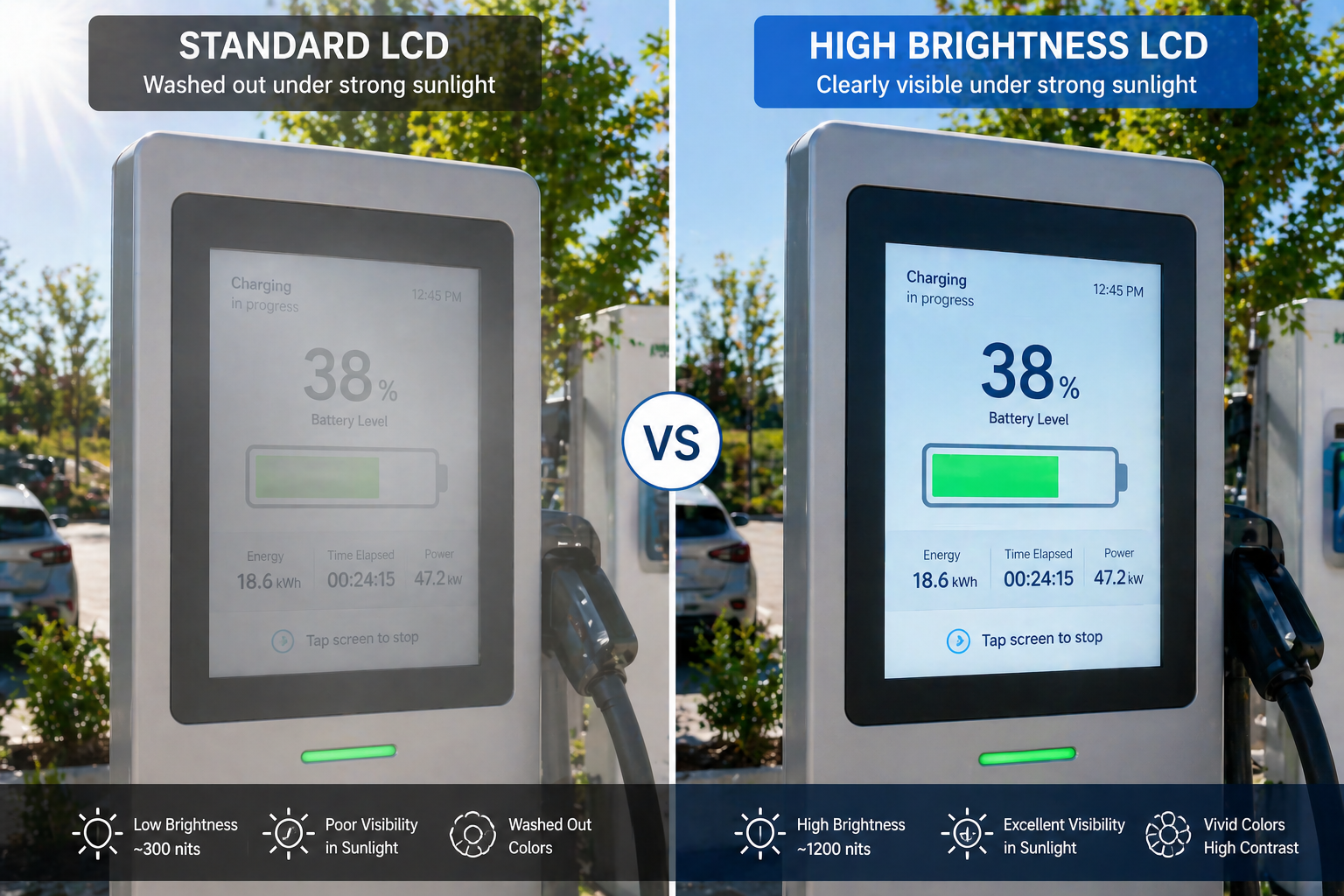
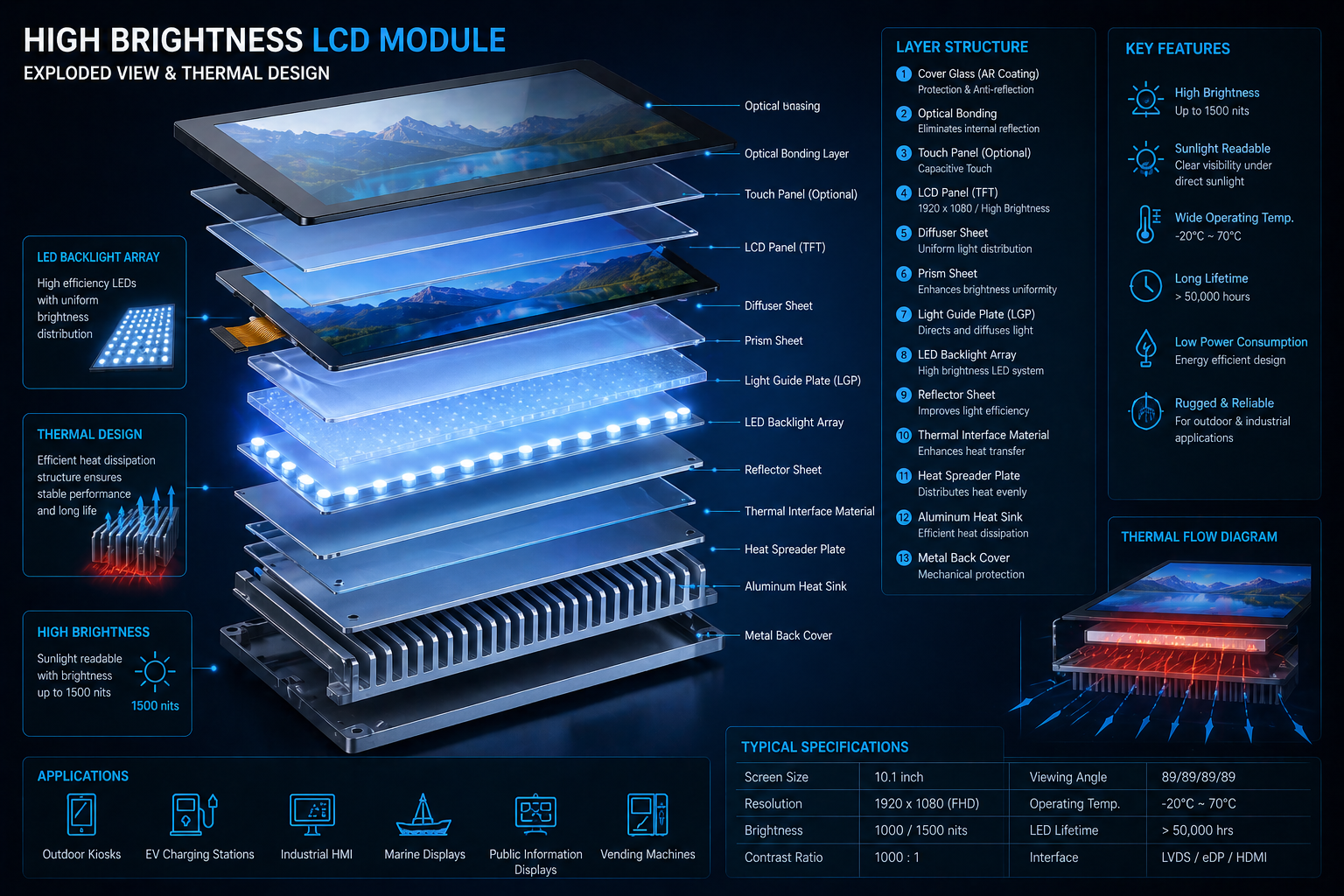
The LED backlight system is the primary cost driver.
👉 In many cases, backlight accounts for 40–60% of total display cost
Higher brightness = more heat.
Without proper thermal design:
To improve sunlight readability, additional optical layers are used:
👉 Optical bonding alone can increase cost by 20–30%, but dramatically improves contrast.
High brightness displays require:
This increases:
Outdoor displays must pass strict testing:
These reliability requirements significantly increase production cost.
| Factor | Standard LCD | High Brightness LCD |
|---|---|---|
| Brightness | 250–400 nits | 1000–2500+ nits |
| Backlight Cost | Low | Very High |
| Power Consumption | Low | High |
| Thermal Design | Minimal | Critical |
| Outdoor Visibility | ❌ Poor | ✅ Excellent |
| Lifespan in Sunlight | ❌ Short | ✅ Long |
Many engineers initially try to “push standard LCD to higher brightness”, but this often leads to:
👉 The result: higher total cost due to redesign and replacement
We provide engineered high brightness display solutions, not just panels:
👉 Helping you reduce failure risk and lifecycle cost
Looking for the right high brightness LCD solution?
We can help you:
👉 Contact us for a custom display evaluation
Analog vs Digital LCD: Signal Architecture, TFT Interfaces, and Engineering Trade-offs
Display Cost Structure Breakdown: Where Your LCD Budget Really Goes
Second Source Strategy for Displays: How Engineers Reduce Supply Chain Risks