
When selecting a display for industrial equipment, medical devices, or embedded systems, one of the most common questions engineers and procurement teams ask is:
Should we choose a TFT display or an STN LCD?
While TFT LCDs offer superior color and resolution, STN displays remain popular in cost-sensitive industrial applications due to their simplicity and reliability.
Understanding the real cost difference between TFT and STN displays is critical for making the right design decision.
This article explains the technical differences, cost drivers, and application scenarios to help you select the most cost-effective display solution.
A TFT (Thin Film Transistor) LCD is an active-matrix display technology where each pixel is controlled by a dedicated transistor.
• Full-color display (RGB)
• High resolution
• Fast refresh rate
• Wide viewing angle (IPS options)
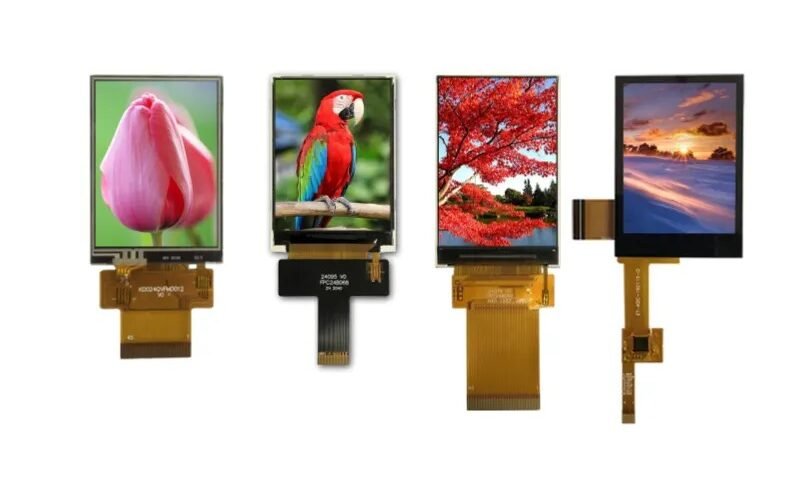
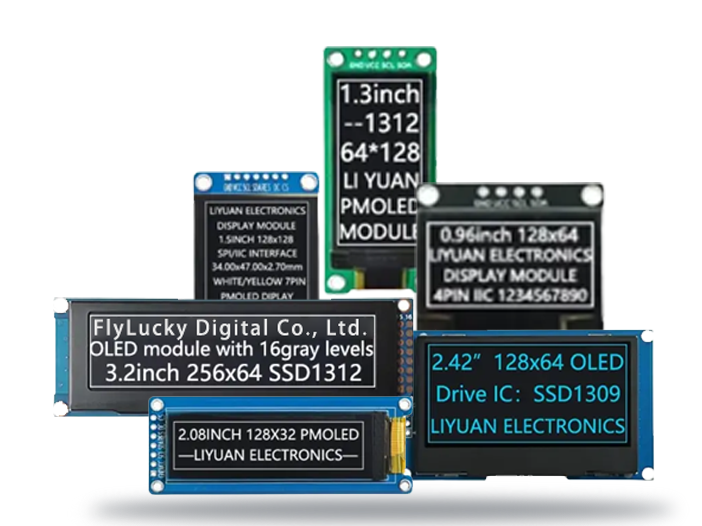
STN (Super Twisted Nematic) displays are a type of passive-matrix LCD designed for monochrome graphics or characters.
• Low power consumption
• Simple controller architecture
• Excellent reliability
• Lower manufacturing cost
| Factor | STN LCD | TFT LCD |
|---|---|---|
| Technology | Passive Matrix | Active Matrix |
| Color | Monochrome | Full Color |
| Resolution | Low–Medium | High |
| Viewing Angle | Moderate | Wide |
| Power Consumption | Very Low | Higher |
| Controller Complexity | Simple | More Complex |
| Typical Cost | Lower | Higher |
TFT displays integrate millions of thin-film transistors, while STN displays use a simpler passive matrix.
This makes TFT panels more expensive to manufacture.
STN displays are typically monochrome.
TFT displays support:
These features require additional driver ICs and higher bandwidth interfaces.
TFT displays usually require:
STN displays often use simpler backlight solutions, reducing cost.
TFT displays commonly use interfaces such as:
These require more powerful processors.
STN displays usually use simpler parallel or serial interfaces, which lowers system cost.
From an engineering standpoint:
STN LCD Advantages
✔ Lower power consumption
✔ Excellent stability
✔ Simple MCU control
✔ Ideal for text/graph displays
TFT LCD Advantages
✔ Rich graphics interface
✔ High resolution
✔ Color UI support
✔ Better user experience
For purchasing teams, the decision often comes down to project requirements vs cost.
Choose STN LCD if:
• The interface is simple
• Only text or basic graphics are needed
• Power consumption is critical
• Budget is limited
Choose TFT LCD if:
• A modern UI is required
• Color graphics are needed
• Higher resolution is necessary
• The device requires a premium appearance
In many industrial projects, the most cost-effective strategy is:
Use STN for control interfaces and TFT for user interaction displays.
This hybrid approach balances:
Selecting between TFT and STN depends on multiple factors:
Our engineering team can help you evaluate the best display solution for your project.
High Brightness LCD Cost Explained: What Really Drives the Price?
🔥 LVDS vs MIPI vs RGB Interface Comparison (Engineer-Level | High-Conversion Content)
Analog vs Digital LCD: Signal Architecture, TFT Interfaces, and Engineering Trade-offs
Display Cost Structure Breakdown: Where Your LCD Budget Really Goes
Second Source Strategy for Displays: How Engineers Reduce Supply Chain Risks