In an era dominated by OLED in smartphones, TVs, and wearable tech, many wonder why LCD is still the display of choice for industrial applications. Why haven’t industrial manufacturers switched en masse to OLED?
The answer lies in what industrial devices need most: durability, stability, and affordability. In environments like factories, hospitals, laboratories, and outdoor control panels, LCD remains unmatched.
Let’s explore the key reasons why LCD displays continue to dominate the industrial display market.
⚙️ LCD vs OLED: A Functional Comparison for Industrial Devices
Feature
LCD Display
OLED Display
Brightness
700–1000+ nits, outdoor readable
400–700 nits, struggles in sunlight
Burn-in Resistance
Excellent – no burn-in
Poor – prone to image retention
Lifespan
50,000–70,000 hours
Shorter, especially for blue sub-pixels
Environmental Tolerance
–30°C to +85°C with rugged LCDs
Sensitive to temperature & moisture
Power Consumption
Higher in dark scenes, lower in white backgrounds
Lower in black UI, but varies by use
Cost Efficiency
Cost-effective in mass production
Expensive, especially for custom or rugged forms
Customizability
Wide range of sizes, interfaces, and backlight
Limited standardization
Static UI Performance
No image degradation
High risk of burn-in with static dashboards
🔍 Why Industrial Devices Prefer LCDs
1. 🌡️ Environmental Stability
Industrial environments are often unpredictable: extreme cold, high heat, humidity, vibrations, or dust. LCD modules—especially ruggedized versions—are built to withstand all of this. OLED panels, in contrast, are more sensitive and fragile.
LCDs are proven reliable in oil fields, hospitals, ships, and power stations.
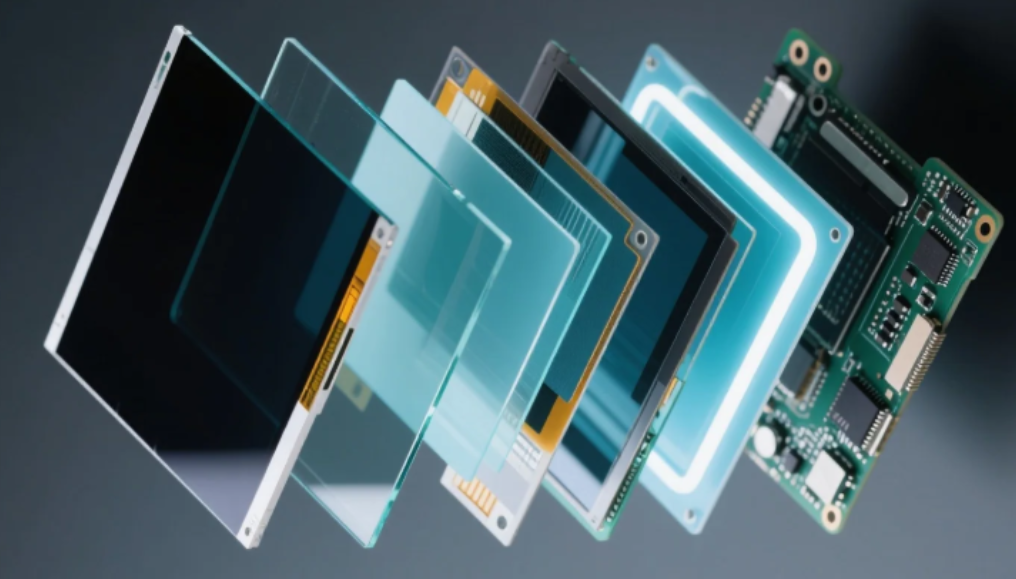
LCD structure diagram
2. 🔥 No Burn-In Risk
Industrial interfaces often display static elements, such as status bars, temperature readings, or process flow diagrams. OLED panels face burn-in or ghosting issues over time, making them unsuitable for this use.
LCD is better suited for continuous, unmoving content.
3. ☀️ Outdoor Visibility
Industrial use frequently happens outdoors or in bright lighting conditions. LCDs—especially FlyLucky’s sunlight-readable TFT modules—can achieve 900+ nits brightness. OLED, by contrast, often dims under direct light to protect the panel.
4. 🛠️ Broad Customization
LCDs support a wide range of:
Sizes (from 0.96” to 10.1”+)
Interfaces (SPI, MCU, RGB, MIPI, LVDS)
Touch layers (resistive or capacitive)
Brightness levels
Polarizers or cover lens options
FlyLucky offers OEM/ODM customization, making LCD more adaptable for diverse B2B applications.
5. 💰 Lower Total Cost of Ownership (TCO)
LCD production is highly mature in China. For industrial buyers seeking scalability, long-term supply, and low MOQ, LCD is more affordable and cost-efficient over a product lifecycle.
FlyLucky offers low MOQs, free samples, and fast lead times for industrial clients.
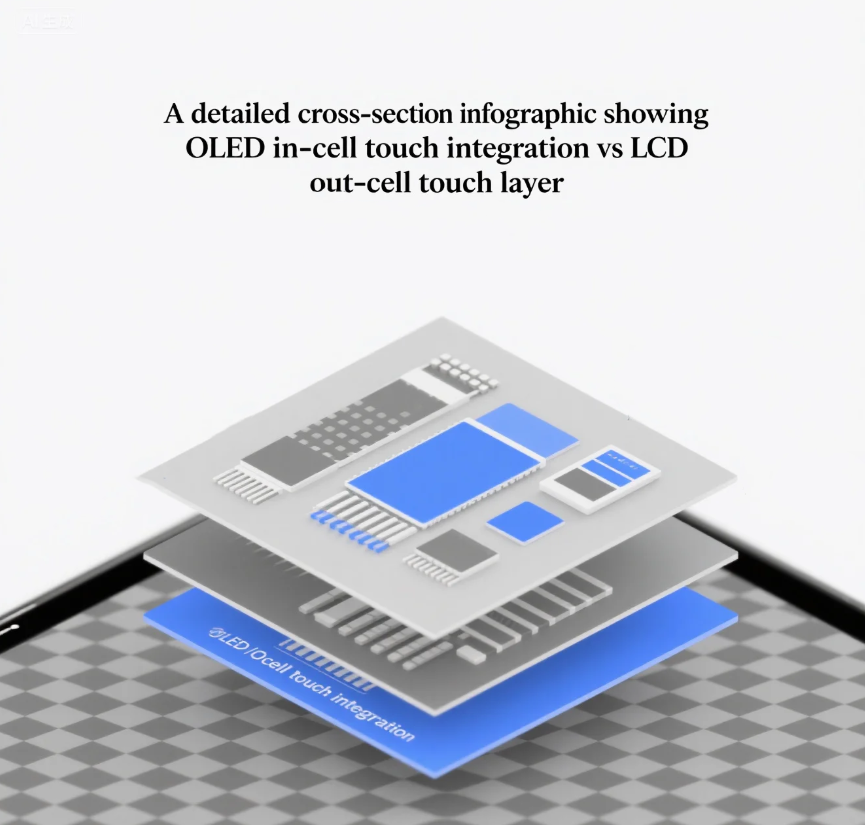
OLED vs LCD Touch Speed Test
🏭 Where LCD Displays Are Still Used in Industry
✅ Industrial Machinery
HMI screens
PLC control panels
Factory monitoring systems
✅ Medical Equipment
Diagnostic devices
Blood analyzers
Infusion pumps
✅ Handheld Instruments
Measuring tools
Data loggers
Scanning or IoT devices
✅ Security Systems
Surveillance controls
Smart access terminals
💬 Expert Insight from FlyLucky Engineers
“We’re seeing OLED dominate entertainment, but LCD dominates where precision, reliability, and sunlight readability matter. For industrial users, that’s non-negotiable.” – FlyLucky R&D Team
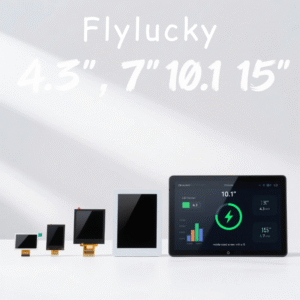
TFT LCD module comparison
🤖 Key Considerations Before Choosing OLED over LCD
Before switching to OLED for your product, consider:
Will it show static images for long hours?
Will it be exposed to direct sunlight?
Does it need to operate in cold, hot, or wet conditions?
Do you require a long lifecycle or easy reordering?
If you answered yes to any, LCD remains the safer, more reliable choice.
📢 Conclusion: LCD Still Leads Industrial Applications
OLED is revolutionary for dynamic, flexible, and vibrant interfaces in consumer electronics. But industrial design isn’t about fashion—it’s about function.
Until OLED addresses key gaps like durability, burn-in resistance, and outdoor performance, LCD remains the industry’s preferred display technology.
📩 Ready to Customize Your Industrial LCD Module?
FlyLucky has served 200+ OEM & ODM projects worldwide. From medical to manufacturing—we engineer custom LCD solutions tailored to your device needs.
Let FlyLucky boost your industrial display design today.