
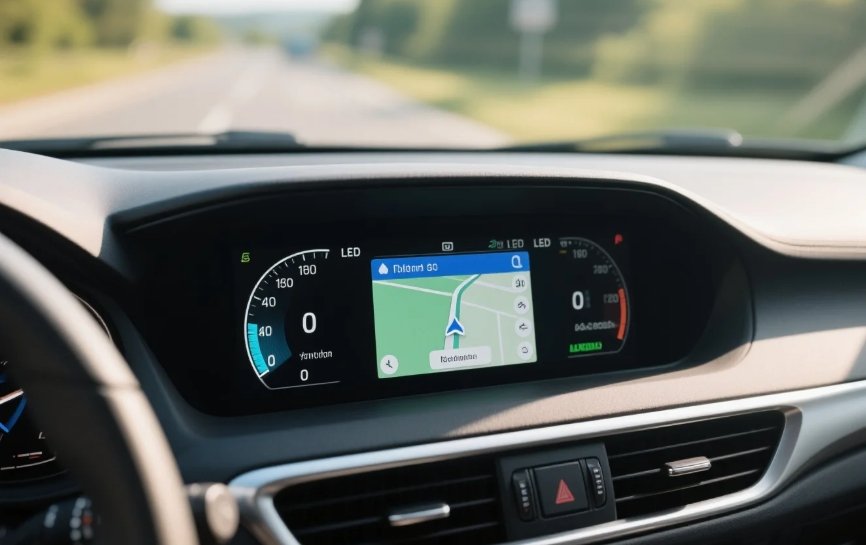
Ghosting is a visual artifact where previous images persist on screen, reducing readability and damaging the user experience. In industrial and embedded systems where precision matters, ghosting can hinder performance, especially in devices with real-time graphics, medical imaging, or automotive interfaces. As a TFT LCD module manufacturer, FlyLucky helps clients eliminate ghosting through advanced materials, optimized driving techniques, and strict production controls.
| Cause | Description |
|---|---|
| Slow pixel response | Liquid crystal molecules transition too slowly between states |
| Voltage instability | Driving voltage too weak or inconsistent across segments |
| Low refresh rate | Poor update rate causes motion trails and lingering frames |
| Subpar panel material | Low-quality liquid crystal layers or filters can’t shift states quickly |
| Poor driver IC configuration | IC not optimized for fast switching or low latency |
TFT LCDs rely on liquid crystal alignment under electric fields to modulate light. Each pixel shifts between states based on voltage. Ghosting occurs when the molecules can’t reorient fast enough before the next frame appears. This is measured as response time, typically in milliseconds.
FlyLucky uses A-grade panel glass, optimized LC materials, and high-quality ICs like ST7789V, ILI9341, or NV3052C for consistent pixel switching. Combined with advanced timing controllers and backlight uniformity, we minimize trailing effects across all operating conditions.
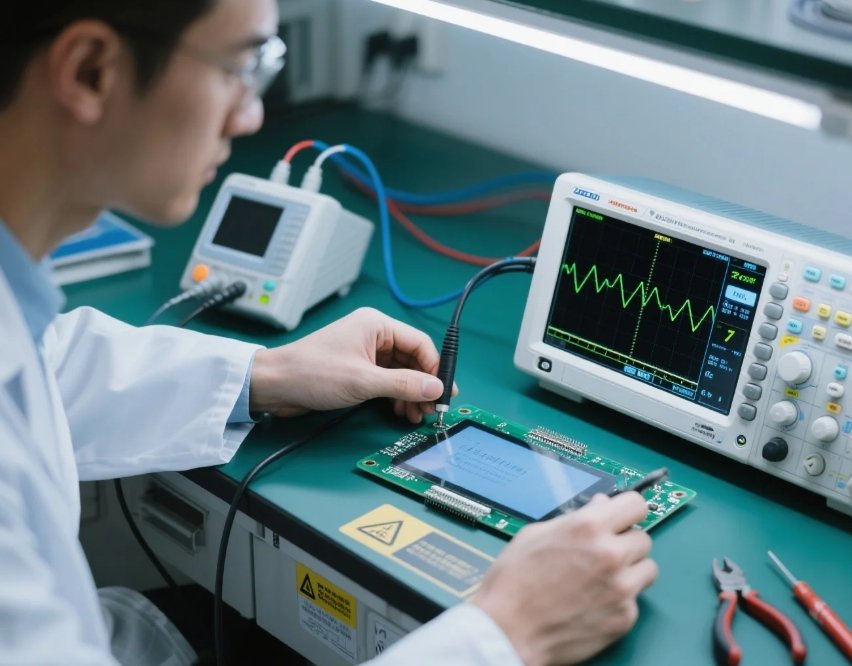
We adopt advanced nematic liquid crystal compounds with low viscosity and fast reorientation, reducing gray-to-gray switching to under 10ms.
FlyLucky integrates voltage overdrive algorithms in the timing controller to temporarily boost voltage during transitions, accelerating state changes.
Our modules support stable 60Hz–90Hz refresh rates, minimizing ghosting while maintaining power efficiency in embedded systems.
We adjust gamma curves, frame inversion methods, and drive waveforms per customer device usage (e.g., SPI vs. MIPI interfaces).
Each LCD module undergoes thermal aging, motion test, and ghost image inspection in production to guarantee zero ghosting out of the box.
Q: Is ghosting the same as burn-in?
A: No. Ghosting is temporary image trailing due to slow pixel response; burn-in is permanent damage, common in OLED.
Q: Can ghosting be fixed in software?
A: Partially—animation timing or refresh rate tweaks help, but hardware (LC material + IC tuning) is the key.
Q: Is ghosting more common in cold environments?
A: Yes. LCD response slows in low temperatures. FlyLucky uses wide-temp materials to maintain clarity.
At FlyLucky, we engineer TFT LCD modules to eliminate ghosting through better materials, smarter ICs, and strict QA testing. From medical tools to vehicle displays, we help our clients achieve fast, clear visuals with every pixel.